Author

admin

Browsing

The current fever pitch surrounding artificial intelligence is starting to look less like a sustainable revolution and more like a repeat of history’s most famous financial bubbles. Analysts are drawing unsettling parallels between today’s AI infrastructure boom and the final, exuberant days of the 1999 internet craze and the speculative SPAC frenzy of 2021. While the underlying technology is undoubtedly transformative, the gap between astronomical valuations and actual profitability has widened into a canyon that many fear will eventually collapse.

A prime example of this disconnect can be seen in recent public offerings where companies are going public with staggering losses but still managing to raise billions. CoreWeave serves as a cautionary tale, having raised over one billion dollars despite nearly matching that figure in annual losses, only to see its share price plummet forty percent shortly after. This trend extends to giants like SpaceX and Anthropic, which command trillion dollar expectations even as they face intense competition and mounting operational costs.

Perhaps the loudest warning bell is coming from inside the boardrooms themselves. Executives at semiconductor powerhouses like Nvidia and AMD have begun cashing out their holdings in significant volumes, suggesting that those closest to the numbers may believe stocks have peaked. When insiders start selling while publicly praising the growth potential of their industry, it often signals that the smart money is seeking an exit before a correction occurs.

Adding to the fragility is the hidden debt accumulating among hyperscalers, where massive off balance sheet liabilities are creating a precarious foundation for the entire sector. With market concentration reaching extreme levels, any stumble by these few dominant players could trigger a systemic downturn. For now, investors remain captivated by the promise of AI, but the combination of insider exits and unsustainable spending suggests we may be approaching a major market top.

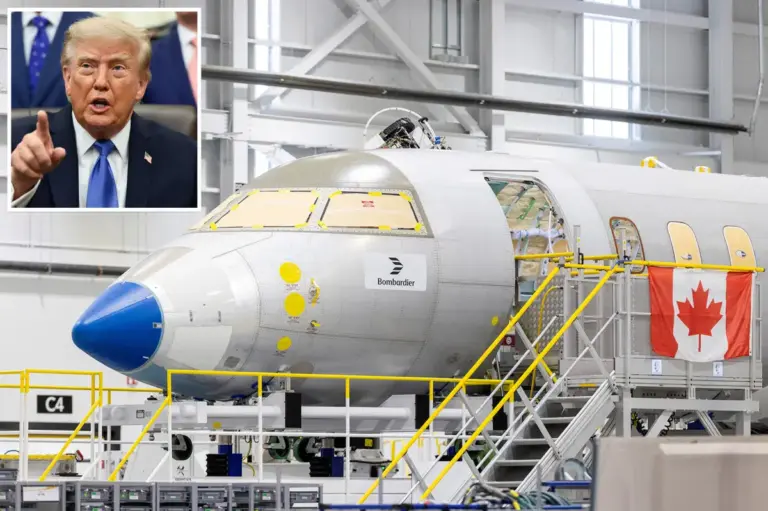
Bombardier shares took a sharp dive on Tuesday after President Trump issued a blunt ultimatum via Truth Social, threatening to ban the Canadian jet maker from the U.S. market. In a post where he accused the company of treating America like a piggy bank, the president insisted that if Bombardier wants access to U.S. buyers, it must move its manufacturing operations onto American soil. The reaction from investors was immediate, with shares opening down over six percent in Toronto before managing to recover some ground throughout the trading session.

The threat comes at a volatile time for North American trade relations, arriving just as Canada slapped retaliatory tariffs on billions of dollars worth of U.S. goods following a breakdown in trade negotiations last month. While the rhetoric suggests a total shutdown, any actual blockade would likely create significant ripples within the United States itself. Bombardier already maintains a massive domestic footprint, employing roughly 3,500 Americans and spending more than 2.5 billion dollars annually with U.S.-based suppliers across several states.

Local lawmakers in key aerospace hubs are already pushing back against the president’s stance, citing the risk to thousands of jobs and critical defense partnerships. Senator Jerry Moran and Representative Ron Estes have highlighted Bombardier’s essential role in Kansas and Texas, noting that the company is deeply integrated into the U.S. military infrastructure through high value contracts with the Air Force for specialized communication platforms. They argue that punishing the firm could jeopardize national security missions and damage an extensive local supply chain.

For its part, Bombardier has attempted to play a diplomatic hand by emphasizing its commitment to growth within the U.S., pointing to recent expansions such as a new component plant in California and maintenance facilities in Delaware. The company stated it intends to continue investing in its American workforce and communities despite the political pressure. As the trade war between Washington and Ottawa escalates, all eyes remain on whether these existing economic ties will be enough to shield the jet maker from further presidential ire.

Uber shares took a dip on Tuesday as investors began weighing the long term implications of Tesla’s latest foray into the autonomous ride hailing market. The sell off comes on the heels of an official launch event in Austin, Texas, where Elon Musk unveiled the Cybercab, a vehicle designed specifically to function without a human driver. While Uber has dominated the ride sharing landscape for years, the prospect of a dedicated fleet of robotaxis is creating visible nerves among shareholders.

The downward pressure on Uber’s stock persists even though many Wall Street analysts remain optimistic about the company’s ability to pivot. Experts suggest that Uber possesses a massive existing network of users and operational expertise that would be difficult for any newcomer to replicate overnight. However, the sheer scale of Tesla’s ambition combined with the growing presence of Google backed Waymo suggests that the era of human drivers may face more immediate disruption than previously anticipated.

Despite these headwinds, some observers believe Uber can find a middle ground by integrating third party autonomous vehicles into its own app rather than fighting them head on. By positioning itself as the primary platform through which all rides are booked regardless of who owns the car, Uber could potentially turn its competitors into partners. For now, however, the market seems focused on the potential loss of market share as Tesla moves closer to turning its futuristic vision into a commercial reality.

Tesla shares took a notable hit last week, sliding roughly six percent following the debut of the much anticipated Cybercab. While the event in Austin, Texas, was intended to showcase the future of Tesla’s robotaxi strategy, it seemingly failed to ignite investor confidence. The reveal introduced a sleek, two passenger electric vehicle stripped of all traditional manual controls, including steering wheels and pedals. Although Tesla has already begun offering limited rides in Austin with around forty five vehicles registered in the state, the presentation lacked the typical theatrical flair and detailed production timelines that shareholders have come to expect from the company’s high profile launches.

Adding fuel to the fire, the National Highway Traffic Safety Administration stepped in just hours after the unveiling to announce a formal investigation into the new service. NHTSA Administrator Jonathan Morrison stated that while the agency supports the growth of automated vehicles, it must ensure that all federal safety standards are met and verify the basis for Tesla’s own self certification. This sudden regulatory scrutiny has become a primary drag on the stock price, as analysts worry about whether these driverless cabs can perform reliably under real world conditions given their unconventional design.

For many investors, the stakes are incredibly high because a successful robotaxi network would fundamentally change how Tesla makes money. Moving away from one time vehicle sales toward a recurring revenue model based on individual rides could unlock massive financial growth. However, current sentiment remains deeply divided. Some see a revolutionary shift in transportation, while skeptics point to competitors like Waymo who maintain certain manual overrides and question why Tesla opted for such an aggressive removal of human controls.

Moving forward, Wall Street will likely ignore the hype and focus on hard data regarding production schedules and geographical expansion beyond Texas. The outcome of the NHTSA probe now stands as a critical pivot point for TSLA shares. Depending on whether regulators find fault with the system or give it a green light, this investigation could either serve as a catalyst for further growth or emerge as a long term liability for Elon Musk’s ambitious vision of an autonomous future.

Meta is stepping up its game in the artificial intelligence race with the official launch of Muse, a personal AI agent designed specifically for ease of use. While many current AI tools require complex prompting or technical knowledge to get high quality results, Meta says Muse is built to feel intuitive and seamless. The goal is to move away from the feeling of chatting with a computer and instead create an experience that feels like having a highly capable digital assistant at your fingertips throughout the day.

The new agent integrates directly across Meta’s ecosystem, meaning users can likely access it through their favorite social platforms without needing to switch apps. From organizing schedules and drafting emails to providing instant creative brainstorming, Muse aims to handle those small but time consuming tasks that clutter a typical workday. By lowering the barrier to entry, Meta hopes to attract casual users who have previously found generative AI too intimidating or cumbersome for daily practical application.

Industry analysts suggest this move is part of a broader strategy by Mark Zuckerberg to embed AI into every facet of the user experience. As competitors push toward more specialized enterprise tools, Meta seems focused on winning over the general public by prioritizing simplicity and accessibility. If Muse manages to become a staple in how people manage their personal lives online, it could significantly increase user retention and open up new avenues for personalized advertising and service integration within the company’s vast network.

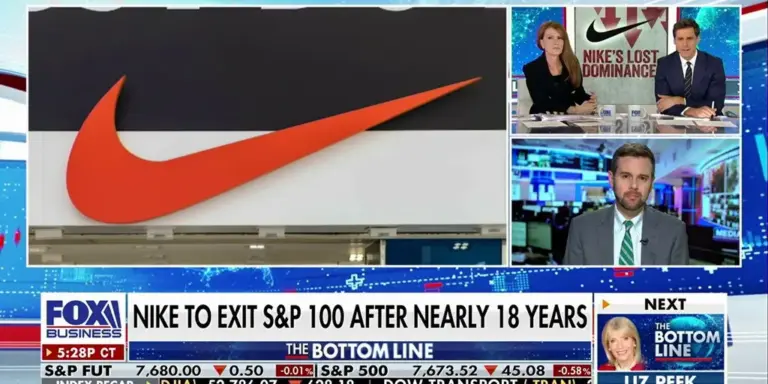
Nike is facing one of its most challenging periods in recent history as the sportswear giant sees its stock price plummet to a twelve year low. The decline marks a sobering moment for a company that has long defined global athletic fashion and dominance, signaling that investors are losing confidence in the brand’s current trajectory. This downward slide isn’t just a temporary dip but part of a broader struggle to maintain momentum in an increasingly competitive market where smaller, more agile brands are eating away at their share.

The financial fallout has reached a critical tipping point with the announcement that Nike is set to be removed from the S&P 100 index. Being dropped from such a prestigious list of the largest companies in the United States serves as a public admission of diminished market capitalization and influence. For shareholders, this exit often triggers further selling pressure, creating a difficult cycle for leadership to break as they attempt to stabilize the ship.

Industry analysts suggest that Nike has struggled to balance its reliance on direct to consumer sales while neglecting some of the wholesale relationships that once fueled its growth. At the same time, consumers appear to be shifting toward newer trends and specialized performance gear, leaving Nike’s legacy products feeling stagnant. The lack of breakthrough innovation over the last few seasons has left the swoosh vulnerable to rivals who have been quicker to adapt to changing athlete preferences.

As the company looks toward the future, it faces an uphill battle to regain its footing and lure back skeptical investors. Management will likely need to implement aggressive strategic pivots or unveil high impact product lines to prove that the brand still possesses its former magic. Until then, Nike remains a cautionary tale about how even the most powerful icons can falter when they lose touch with the pulse of their customers.

The financial world has long looked to copper as a barometer for the global economy, giving the red metal the nickname Dr. Copper because its price fluctuations often predict whether the world is heading toward growth or instability. After hitting a low of roughly 2.17 dollars per pound during the depths of March 2020, copper has embarked on a steep climb. By 2026, the metal began trading around the six dollar mark, driven by a perfect storm of surging demand and a dwindling supply chain that has struggled to keep pace with modern industrial needs.

Much of this price surge stems from the aggressive shift toward electrification and artificial intelligence. While traditional construction remains a primary consumer of copper due to its conductivity and resistance to corrosion, new frontiers are pushing costs higher. Electric vehicles require significantly more copper than internal combustion engines, with battery electric buses using over ten times as much material as standard cars. When combined with the massive infrastructure requirements for AI data centers and renewable energy grids, the result is a widening gap between how much copper is available and how much the world actually needs.

On the supply side, the situation has grown precarious as high grade ore deposits deplete and new discoveries remain rare. Bringing a new mine from discovery to production can take up to two decades, leaving markets vulnerable to short term shocks. Recent disruptions have only worsened the deficit, including government shutdowns of major sites like Cobre Panama and operational accidents at other massive mines in Mali and Indonesia. These losses, compounded by geopolitical tensions and trade tariffs under President Donald Trump, have sent prices reaching record highs throughout 2025 and 2026.

Looking ahead, experts warn that we may be entering an era of chronic scarcity. The International Energy Agency has forecasted a potential thirty percent shortfall in copper supply by 2035 if current trends continue. To bridge this gap, industries are increasingly relying on recycled scrap metal to balance their books. While there are hopes that renewed investment in exploration will eventually stabilize the market, for now, Dr Copper continues to signal an era of intense competition for one of earth’s most essential materials.

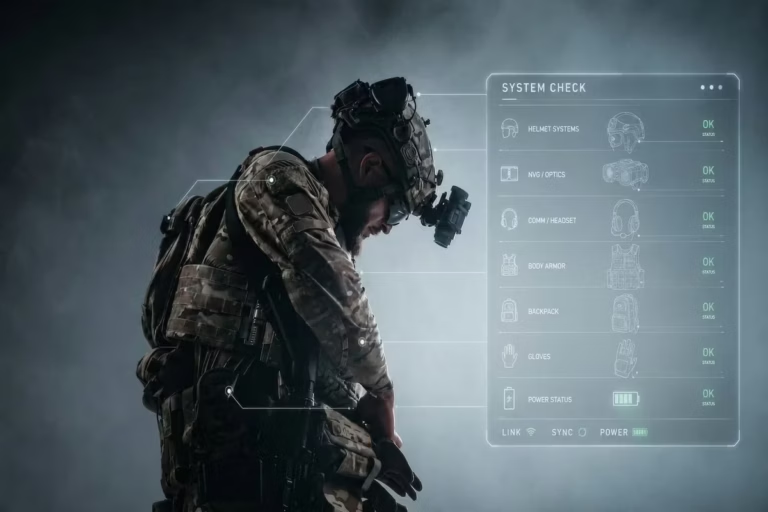
The global scramble for critical minerals is no longer just about electric vehicles and power grids. A new frontier is emerging in the defense sector, which, while smaller in volume than the automotive industry, offers a highly lucrative opportunity for next generation battery technology. Experts from SC Insights suggest that while military demand isn’t large enough to justify building massive standalone factories, it provides a vital catalyst for commercializing high performance options like solid state and lithium sulfur batteries. Unlike car manufacturers who prioritize low costs, defense and aviation clients are often willing to pay a premium for extreme energy density and reduced weight.

This shift is being accelerated by real world combat experience, specifically the war in Ukraine. The staggering scale of drone deployment has highlighted a desperate need for agile supply chains capable of pivoting from peacetime levels to wartime production almost overnight. While many current drones rely on standard commercial batteries, the push toward more sophisticated unmanned ground vehicles and aircraft means that basic chemistry will soon hit a ceiling. In aviation especially, where every single kilogram counts, the transition to advanced chemistries becomes a strategic necessity rather than a luxury.

Despite this growth, analysts warn against the mistake of trying to build an entirely isolated supply chain solely for military use. With projected annual growth between twenty and forty percent for high tech applications, the sector remains tiny compared to the thousands of gigawatt hours required by transport and grid storage. Building specialized refineries or mines just for defense would be economically impractical given the sheer disparity in scale. Instead, the goal should be fostering a deep and flexible industrial base that includes skilled labor and diversified processing capacities.

One of the most pressing vulnerabilities remains the heavy reliance on China for anode active materials, which still dominates nearly ninety one percent of production despite the abundance of graphite globally. While cathode capacity is beginning to expand in North America and Europe thanks to new legislation, experts argue that true resilience comes from broad industrial depth rather than simple stockpiling. By integrating defense needs into a wider commercial ecosystem, Western nations can ensure they have the technological edge without attempting to sustain an unsustainable independent infrastructure.

The financial landscape of digital defense is shifting rapidly as cybercrime costs are projected to soar past 23 trillion dollars by 2027. This escalating threat environment has turned the cybersecurity sector into a primary focus for investors, particularly as artificial intelligence creates a double edged sword. While AI empowers defenders, it also equips hackers with sophisticated tools capable of bypassing traditional safeguards and identifying code exploits with unprecedented speed. According to recent data from the Investing News Network, the industry is currently dominated by a mix of specialized security firms and massive tech conglomerates that have integrated defense into their core ecosystems.

Leading the pack by market capitalization is Microsoft, which holds a staggering valuation of 3.58 trillion dollars. Though not a dedicated security firm, Microsoft has become a powerhouse in cloud native application protection. The company recently pushed boundaries with the launch of Codename MDASH and its accompanying AI tool, MAI Cyber 1 Flash, specifically designed to hunt for zero day vulnerabilities before they can be weaponized by malicious AI agents. Close behind is Amazon, leveraging its long history of high level government contracts to expand its AWS ecosystem. With the introduction of AWS Continuum in mid 2026, Amazon continues to blend automated vulnerability discovery with strict user defined guardrails to keep enterprise data secure.

Beyond the cloud giants, hardware and networking veterans like Broadcom and Cisco Systems have pivoted aggressively toward intelligent security. Broadcom has utilized strategic acquisitions such as Symantec and VMware to build a fortress around private clouds and payment authentication. Meanwhile, Cisco has spent billions expanding its reach, most notably through its massive acquisition of Splunk and the subsequent rollout of Cisco Cloud Control. These platforms reflect a broader trend in the industry where human operators now work side by side with agentic AI to manage complex IT infrastructures in real time.

Specialized players continue to hold significant ground despite the encroachment of big tech. Palo Alto Networks maintains its status as a global leader by focusing on advanced firewalls and dynamic access management via its new Idira tool, while IBM remains a cornerstone of integrated security services for large scale enterprises. As these ten titans vie for dominance on the NASDAQ and NYSE, their trajectory suggests that the future of cybersecurity will not just be about building higher walls, but about deploying smarter, faster autonomous systems that can evolve as quickly as the threats they fight.

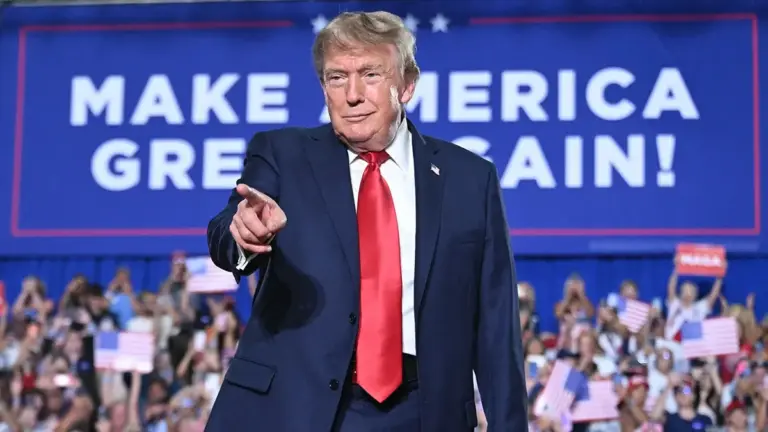
EXCLUSIVE — DALLAS — With an eye toward energizing the GOP’s MAGA base, the Republican National Committee (RNC) on Tuesday announced the speaking order and times of this week’s first-ever GOP midterm convention, and President Donald Trump will be the Primetime headliner both nights.

According to the list, which was shared first with Fox News Digital on the eve of the convention, the president will deliver Wednesday’s keynote address, which is tentatively scheduled to start at 9 p.m. ET.

Trump will return on Thursday evening at the American Airlines Center in downtown Dallas to close out the convention, with remarks after Vice President JD Vance gives the second night’s keynote speech.

With less than two months to go until the midterm elections, Trump and Republicans are gathering in Texas for their historic confab as they aim to energize the party’s base ahead of key races that will determine whether the GOP keeps control of Congress. Supporters of the president traditionally do not turn out in robust numbers when Trump is not on the ballot.

DEMOCRACY ’26: STAY UP TO DATE WITH THE FOX NEWS ELECTION HUB

Democrats and Republicans traditionally hold large nominating conventions during presidential election years. But Trump last year floated the idea of a similar gathering ahead of the midterms to showcase the signature policy achievements he and Republicans in Congress have produced over the past two years.

The president called the convention “a truly Historic Event” and “a RALLY like none other!” when he announced it earlier this summer.

The convention comes as Republicans face energized Democrats and stiff political headwinds as they defend their slim House and Senate majorities in the midterms.

But Republicans are expected to paint a contrast, as they use the convention to spotlight the Democrats’ leftward lurch and tie the entire Democratic Party to far-left and socialist proposals.

“The midterm election is about the future of our country. President Donald Trump and Republicans are fighting to launch the golden age of America while extreme liberal Democrats want to tear this country apart and create a liberal failed state with their out-of-touch and anti-American views,”,” Republican National Committee chair Joe Gruters argued in a statement to Fox News Digital.

THESE 12 MIDTERM RACES WILL DECIDE WHICH PARTY CONTROLS THE SENATE

Gruters emphasized that “the choice is clear in November and the American people will reject these liberal policies and deliver historic wins for Republicans across the country.”

The DNC, which remains in debt and decided against holding a similar convention, sees the GOP confab as a chance to blast Republicans.

“While everyday Americans struggle to pay their bills, fill up their tanks, or put food on the table, Republicans are hosting a multi-million dollar celebration to satisfy an aging and erratic Trump and tie vulnerable Republican candidates closer to his failed agenda,”,” DNC Rapid Response Director Kendall Witmer charged.

Witmer argued that “Americans don’t want a ‘Trumpapalooza’ — they want lower costs and affordable healthcare.”

The convention will also serve as the GOP’s closing argument heading into November. In the fight for the Senate majority, Republican candidates in some of the most crucial races will also address the convention.

Texas Attorney General Ken Paxton, the GOP nominee in Texas who is facing off against Democratic state Rep. James Talarico in the race to replace Republican Sen. John Cornyn, will speak on the first evening. So will former RNC Chair Mike Whatley, who is defending retiring GOP Sen. Thom Tillis’ seat in battleground North Carolina.

SIGN UP TO GET THE POLITICS NEWSLETTER

Sen. Jon Husted of Ohio, who is in a pitched fight with former longtime Democratic Sen. Sherrod Brown, will also address the crowd, as will Rep. Mike Collins of Georgia, the Republican challenger taking on Democratic Sen. Jon Ossoff in swing state Georgia.

Former Rep. Mike Rogers of Michigan, who is hoping to flip a Democrat-held open seat in the key Great Lakes battleground as he runs against far-left Democratic nominee Abdul El-Sayed, speaks on Thursday evening.

In the battle for the House, where the GOP holds a razor-thin majority, incumbents and candidates in competitive races will also be in the speaking spotlight.

They include Reps. Monica De La Cruz of Texas, Derrick Van Orden of Wisconsin, Rob Bresnahan of Pennsylvania, and candidates Mike LiPetri of New York and Jay Feely of Arizona on Wednesday night.

Among the House Republican incumbents and candidates in close races speaking on Thursday are Reps. Ryan Mackenzie of Pennsylvania and Mike Lawler of New York, along with nominees Greg Cunningham of New Mexico, Derrick Merrin of Ohio and Eric Flores of Texas.

STATE OF PLAY: WHO’S UP AND WHO’S DOWN IN THE LATEST FOX NEWS POWER RANKINGS

Speaker Mike Johnson will speak on Thursday evening, according to the RNC schedule.

Johnson’s Senate counterpart, Senate Majority Leader John Thune (R-South Dakota), is notably absent from the list of speakers released by the RNC. But a source familiar with the planning tells Fox News Digital that Thune will be in Dallas, with a full schedule that includes helping Senate candidates fundraise.

Texas Gov. Greg Abbott, who is running for a fourth term leading the Lone Star State, speaks on Thursday. So does Sen. Ted Cruz of Texas, the conservative firebrand who is not on the ballot this year but could make a second White House bid in 2028.

Meanwhile, some of the biggest names in Trump’s Cabinet are scheduled to speak, including Attorney General Todd Blanche and Treasury Secretary Scott Bessent on Wednesday evening, and Health and Human Services Secretary Robert F. Kennedy Jr., who spearheaded the Make America Healthy Again (MAHA) movement, on Thursday evening.

This post appeared first on https://www.foxnews.com