Author

admin

Browsing

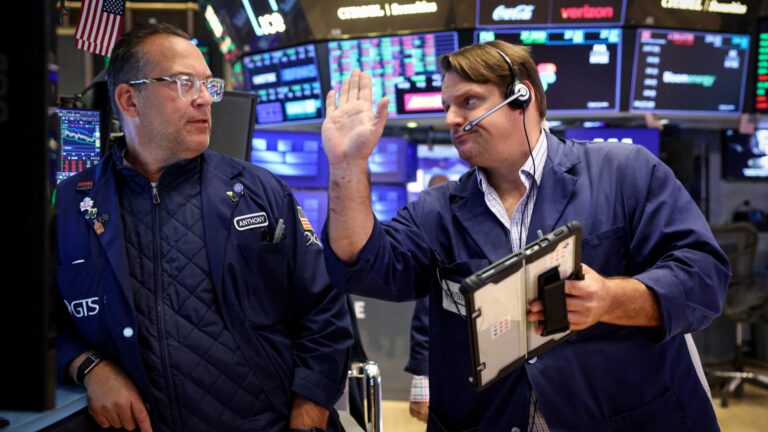
Wall Street entered Friday morning in a state of cautious anticipation, with stock futures remaining largely flat as investors held their breath for the release of August’s payrolls report. After a strong showing on Thursday, where the Dow surged more than 600 points in its best session since early August, traders seemed content to pause and wait for fresh data. Early indicators showed the S&P 500 and Nasdaq-100 futures edging slightly higher, reflecting a general optimism that has put all three major averages on track for a winning week.

The prevailing mood is heavily influenced by signals from the Federal Reserve. Markets received a boost following comments from Governor Christopher Waller, who indicated he would likely support keeping interest rates within their current target range during the mid-September meeting. This dovish tilt suggests that policymakers may be shifting their focus away from fighting inflation alone and starting to consider the health of the labor market. Analysts now expect the August jobs report to show an addition of roughly 53,000 nonfarm payrolls, marking a significant rebound from the losses seen in July.

Beyond the equity markets, global volatility remains high due to geopolitical friction. Crude oil prices ticked upward on Friday as escalating military tensions between the United States and Iran sparked fears of supply disruptions through the Strait of Hormuz. While physical energy flows remain constrained, analysts suggest that ongoing efforts to stabilize regional exports are preventing a full scale price spike despite the instability.

Meanwhile, other asset classes are navigating their own hurdles. Bitcoin hovered just under $81,000 as cryptocurrency investors look toward Washington for legislative clarity regarding digital asset frameworks. In foreign exchange markets, the Japanese yen reached multi-month highs against the dollar, fueled by speculation that the Bank of Japan might hike rates further to maintain currency stability. As these various threads converge, all eyes remain firmly fixed on this morning’s employment numbers to determine whether the economy is cooling enough to trigger future rate cuts.

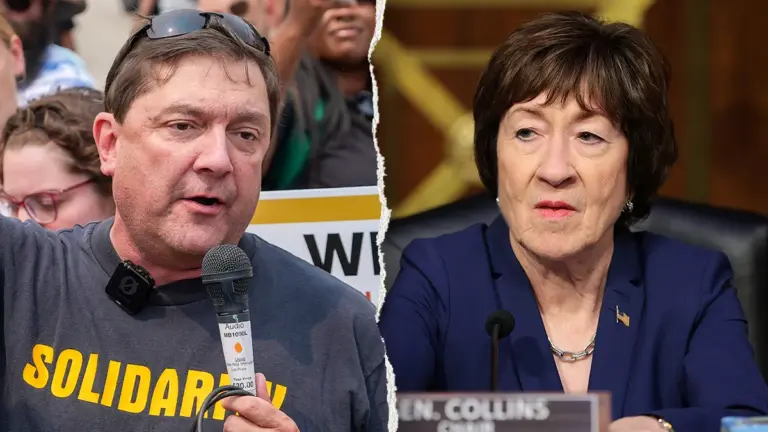
Sen. Susan Collins, R-Maine, had a sly way of addressing reports that Troy Jackson, her Democratic opponent, fathered two children with his second cousin.

“Well, I’m not going to bring up the fact that the mother of his two children is his second cousin,” Collins told a Politico reporter when asked if Jackson’s personal life would be fair game on the campaign trail. “I don’t know whether people know that or not.”

“But you just mentioned it,” the reporter shot back.

The clip quickly spread across social media as conservatives praised Collins for her political savvy.

TOP DEM OPERATIVE BRUSHES OFF LATEST SCANDAL PLAGUING MAINE SENATE CANDIDATE AS ‘SALACIOUS GOSSIP’

Republican political operative Jesse Hunt reacted to a clip of the interview by calling Collins a “silent killer.”

“A less-than-2-minute precis of how Susan Collins is as stone-cold a political combatant as the Senate has ever seen,” Politico editor Mike DeBonis wrote on X.

National Rifle Association public affairs director and Maine native Justin Davis responded to the clip by predicting that “the upcoming debates are going to be gold.” NOTUS reporter Igor Bobic, meanwhile, said that Collins used a “Trump tactic” by bringing up a subject while pretending not to mention it.

“Count Collins out (like everyone did in ‘20) at your own peril,” Targeted Victory CCO Matt Gorman posted on X.

“Susan Collins from the top rope on Troy Jackson,” GOP communicator Steve Guest posted on X.

Reports about Jackson’s relationship with his second cousin first surfaced in July, when The Maine Wire reported that Jackson and his longtime partner share the same great-grandparents.

MAINE DEMOCRATS CROWN TROY JACKSON AS PLATNER REPLACEMENT AS FRESH SCRUTINY CLOUDS SENATE RESET

“It’s truly hysterical how Democrats can’t seem to find one normal dude to run for office,” conservative commentator Greg Price posted on X, alluding to the fact that Jackson replaced Graham Platner on the ballot in Maine after he terminated his campaign amid a rape allegation.

Other aspects of Jackson’s personal life have come to the forefront of his Senate campaign, including a 1988 police report which claims he assaulted a man at a bar. The report also states that his partner accused him of pushing her around.

Jackson does not dispute that he attacked another man, but strongly denies laying a hand on his partner, who has said she does not recall giving a statement to that effect to the police.

When asked about the police report in August, Collins told Fox News Digital that “he’s the one that needs to respond to the reports. I’m not going to comment on them. But I will say that based on widespread reporting it appears that he struggles to control his temper … From my perspective, it seems that vetting is very important. We learned the failure of vetting with Graham Platner. But that’s really up to the Democrats.”

EMBATTLED MAINE DEMOCRAT DEADLOCKED WITH COLLINS DESPITE CONTROVERSIES IN KEY SENATE RACE, NEW POLL SHOWS

During her interview with Politico, Collins denied that Jackson would necessarily be an easier opponent than Platner, pointing out that the former has a long political record that he can be criticized over — something that Platner lacked as a political outsider.

Jackson has framed the GOP focus on his personal life as a distraction from the issues Mainers actually care about.

“Susan Collins will do anything to distract from the fact that she votes with Trump 96% of the time and has sold out working people in Maine,” his campaign previously told Fox News Digital. “Personal attacks on Troy’s family are shameful and desperate.”

The Jackson campaign did not respond to a request for comment when reached by Fox News Digital on Wednesday.

Fox News Digital’s Paul Steinhauser contributed to this report. 

This post appeared first on https://www.foxnews.com

Tesla is signaling a potential shift in its ambitious robotaxi strategy by inviting outside businesses to express interest in purchasing and managing Cybercab fleets. In a newly published form released ahead of a major event in Austin, the electric vehicle giant is gauging appetite from companies that might want to buy these autonomous vehicles or provide the necessary infrastructure to support them. While the form does not guarantee that Tesla will move away from its internal operations, it strongly suggests that the company is looking for partners to help scale its network more rapidly than it could do alone.

This openness marks a departure from Elon Musk’s earlier visions for the Tesla Network. Years ago, Musk imagined a world where individual car owners could rent out their personal Teslas to earn passive income, essentially creating a decentralized version of Uber. However, after years of testing and development, Tesla shifted toward owning and operating its own dedicated fleet using Model Ys and eventually the purpose built Cybercab. By opening the door to third party fleet operators now, Tesla seems to be acknowledging that widespread market saturation requires a broader coalition of commercial partners rather than just corporate ownership.

The prospect comes at a time when specialized autonomous fleet management is becoming a competitive industry. Companies like Moove are already carving out niches by managing Waymo fleets across various cities, while traditional rental giants such as Hertz and Avis are exploring partnerships with platforms like Uber. If Tesla decides to sell the Cybercab to these types of entities, it could trigger a surge of smaller operators entering the space, allowing Tesla to deploy thousands of vehicles across different jurisdictions without shouldering all the operational risk themselves.

For now, the details remain vague as Tesla simply asks interested parties to categorize their goals, whether through fleet purchasing, developing mobility hubs, or collaborating on events. What remains clear is that the road to full autonomy is proving too vast for any single company to pave entirely on its own. By extending this olive branch to external investors and managers, Tesla is positioning itself not just as a taxi service provider but as the primary hardware supplier for an entire ecosystem of autonomous transit.

Gold futures climbed higher on Thursday morning as investors flocked to the precious metal following a series of US airstrikes against Iranian targets. This sudden military escalation in the Strait of Hormuz provided a much needed boost for bullion, pushing December contracts to an intraday high of 4,470.70 dollars per troy ounce. The rally comes after US forces retaliated for attacks on commercial vessels in the region, triggering a classic flight to safety among traders who view gold as a reliable haven during periods of intense geopolitical friction.

The spike in price effectively paused a downward trend that had seen gold suffer four straight sessions of losses. Prior to this week’s conflict, the market was struggling under the weight of hawkish comments from Federal Reserve Chair Warsh at the Jackson Hole Symposium. Those remarks had bolstered the US dollar and pushed Treasury yields higher, creating a difficult environment for non yielding assets like gold and dragging spot prices down to a three week low just days ago.

Beyond the immediate headlines from the Middle East, experts suggest that gold is currently caught in a complex tug of war between central bank policy and growing fears over US fiscal health. While high interest rates typically hurt gold, some investors have been using the metal as a hedge against rising government debt and potential currency debasement. This tension means that while geopolitical shocks can cause sharp rallies, long term direction may depend more on upcoming economic data such as next week’s Consumer Price Index report.

Interestingly, the way people buy gold is shifting even as prices fluctuate. Central banks in countries like China and Poland continue to stockpile massive amounts of the metal, contributing to robust institutional demand. However, these record highs are pricing out everyday consumers. Reports indicate that jewelry consumption in major markets like India and China is plummeting, suggesting that bars and coins are set to overtake jewelry as the primary driver of global gold demand for the first time since the pandemic era.

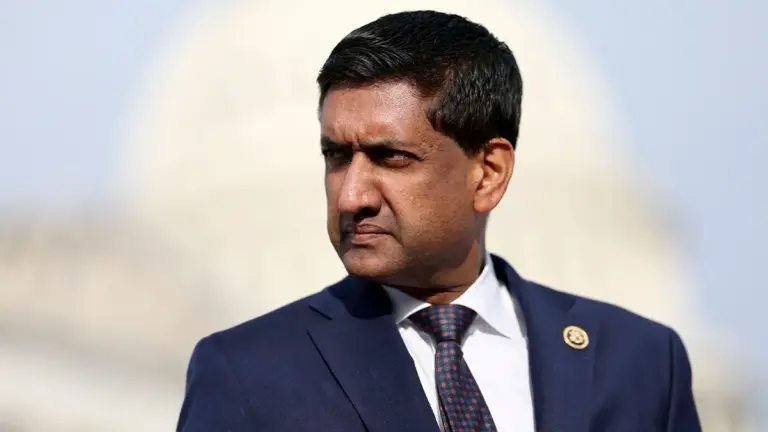
FIRST ON FOX: Rep. Ro Khanna, D-Calif., has been floated as a potential 2028 Democratic contender for president, but his longtime ally and former senior advisor on foreign trade and economic development could be a liability due to his deep ties to Chinese Communist Party officials, a Fox News Digital investigation found.

Henry Yin is a longtime California businessman and political operative who Khanna has praised for his “leadership” and has called one of his “good friends” on Facebook. He was born in China, raised in Taiwan and then moved to the United States, where he has lived for several decades.

However, while living in California, Yin has been a major player helping China get a foothold in California over the last several decades through multiple roles, including serving as a member of the California Commission for Economic Development and founding a consulting firm that included multiple corporate clients with ties to Chinese Communist Party officials. 

A 2011 profile piece revealed that Yin “made his fortune selling used computer equipment to China” and had “done business in China for more than a quarter-century.” The profile piece went on to say Yin has “good connections and a sense of [China’s] business climate” and was “leading city trade delegations to China, which have contributed to several Chinese firms — most recently software company Trunkbow International — setting up offices in the city and helping city businessmen get a foothold in China.”

SWALWELL RESIGNATION COLLIDES WITH CHINA-LINKED SCANDAL AS CRITICS DEMAND FILE RELEASE

“Henry has some sort of special skill-building relationships,” one businessman said in the profile piece, praising Yin. “There’s a lot more government involvement in China, and you need relationships with local government officials.”

In addition to his consulting business and several overseas trips to China, Yin has allegedly attended at least 10 events hosted by United Front groups, including the All-China Federation of Returned Overseas Chinese (ACFROC), according to China expert Jackie Deal, the president of Long Term Strategy Group, a defense research firm. Fox News Digital has extensively reported on the CCP’s United Front and the threat it poses to U.S. institutions as the CCP gains influence in the United States.

In a Sept. 2019 Facebook post, Khanna announced that Yin, who was first appointed to the California Commission for Economic Development in 2010 by then- Republican Gov. Arnold Schwarzenegger and later reappointed to the position in 2015 by the succeeding Democratic Gov. Jerry Brown, would “serve as my Senior Advisor on Foreign Trade and Economic Development.”

“We discussed the importance of improving the US China relationship to cooperate on issues of climate change and medical research while protecting intellectual property and opening access to markets,” Khanna continued. “I was particularly touched that Henry and the group had a birthday cake for me. It was wonderful celebrating with them!”

A few months later, in December of the same year, Khanna posted about Yin on Facebook again, writing, “Thank you Henry Yin for your leadership!” 

That same month, Yin invited Khanna to be his “honorable guest” for an event titled, “S.V. U.S.-China Trading Partners Concerned Group Dinner Meeting Agenda,” which was sponsored by Yin’s consulting firm, USA-China-Link. A review of the event’s presentations showed the attendees were slated to talk about an array of topics, including China investments, technology and business asset management, among other topics. Khanna was slated to discuss intellectual property.

ELITE US COLLEGES LINKED TO CHINESE SURVEILLANCE LABS DRIVING UYGHUR ‘GENOCIDE,’ STUDY WARNS

In Feb. 2020, Khanna posted another photo of himself having dinner with Yin, who he referred to as one of his “good friends.” In the post, Khanna decried that “Chinese Americans are feeling they are being stereotyped as the symbols for the coronavirus.” 

“This is a time to embrace our Chinese American neighbors and friends and continue to frequent Chinese-American stores, restaurants and shopping centers.” 

On Yin’s LinkedIn profile, which still includes the senior advisor title with Khanna’s office, he includes over a dozen slides detailing his consulting business, USA-China-Link, and showcasing his business acumen in China, which was featured in several profile pieces in Chinese state media. One of the slides says his firm “specialized in high-tech and green tech” and helped China do business in California and vice versa. Other slides show a list of his Chinese clients and a slide that called him an “Official Commerce Rep in US for the Province of Fujian, China.”

Another slide shows a photo of Yin at the Great Hall of the People in Beijing in 2009 for the China National Day Banquet, where he calls himself a “VIP” in the caption. According to reports on the event, the banquet included several senior-level CCP officials in attendance, including then-Chinese President Hu Jintao and his successor Xi Jinping, the former third-ranking member of the CCP’s Politburo Standing Committee, Wen Jiabao, among other top officials.

A spokesperson for Khanna, who is a member of the House Select Committee on the CCP, told Fox News Digital earlier this year that “Henry Yin has never been employed by Rep. Khanna” and “he doesn’t serve in any role in his office or campaign.” When asked Wednesday whether his office stands by the quote, Khanna’s office did not immediately respond. Despite the previous denial, Khanna and Yin were pictured sitting beside each other earlier this year at an event.

In Feb. 2026, Khanna posted a photo showing him sitting beside Yin at a political action committee meeting in Sunnyvale, California. Khanna wrote he was “honored to be back in the district, hearing directly from Chinese American community leaders.”

Yin has made several trips abroad to China over the last decade, including a July trip where he led a delegation to Guangzhou to meet with Zhu Xiaojun, the Department of Commerce of Guangdong Province’s deputy director, which is a CCP-controlled position. A Chinese report on the trip said the two sides collaborated on two-way trade between California and the Guangdong province. Two months before the event, Yin attended the 2026 China-California Economic and Trade Forum, which was hosted by the Chinese Consulate in Los Angeles and included multiple CCP officials in attendance.

He also accompanied California Gov. Gavin Newsom in late 2023 for a delegation, where he served as an advisor, according to another Chinese media report. During the trip, Newsom would meet with top CCP officials, including Chinese President Xi Jinping and Wang Yi, who has been a CCP member since 1981 and is currently serving as a “Member of the Political Bureau of the CPC Central Committee, Director of the Office of the Central Commission for Foreign Affairs, and Minister of Foreign Affairs.” Newsom also met with Han Zheng, China’s vice president.

A Fox News Digital review of Yin’s Facebook account also unearthed other China trips he made, including Chinese delegations he has helped host in California. In 2014, Yin signed a memorandum of understanding (MOU) between the California Green Tech Center and China Venture Capital Association, which appeared to be one of his firm’s clients. Other posts show multiple China visits, including the 2015 “China South Asia Expo,” which featured a speech from the now-former Chinese Vice President Li Yuanchao. A 2019 post highlights another China trip he took, which he called “fruitful” and included over a dozen photos of Chinese officials he met with. One of the photos included the names of Chinese and American companies where he was facilitating trade projects. 

ELITE US COLLEGES LINKED TO CHINESE SURVEILLANCE LABS DRIVING UYGHUR ‘GENOCIDE,’ STUDY WARNS

A Fox News Digital investigation also unearthed a 2013 photo that appears to show Christine “Fang Fang” Fang — the Chinese spy at the center of the scandal involving disgraced former Rep. Eric Swalwell — alongside key political figures. Posing together at a public gathering, Fang stood behind then-Chinese Consul General to San Francisco Gao Zhansheng and top leaders from the Asian Pacific Islander American Public Affairs Association (APAPA), including Yin.

A recently declassified FBI report on Swalwell’s ties to Fang Fang revealed that a “prominent businessman in the Bay Area” tied to APAPA introduced Swalwell to Fang Fang. While Fox News Digital could not confirm whether the redacted section of the FBI report was referring to Yin, or potentially his brother, C.C., who founded APAPA and opened up several McDonald’s franchises, Axios previously quoted Yin saying that Fang Fang was “very active” with the APAPA Bay Area chapter and remembered seeing her at several events.

The photo was originally shared on Facebook in February 2013 by the late Don Sun, a prominent California civic leader and tech executive who passed away in 2024. In the photo caption, Sun wrote that the Yin family and APAPA had thrown a farewell dinner for the Chinese consul at San Francisco’s Embarcadero Center. Sun said the photo depicts the consul and “all my friends at APAPA.”

UNEARTHED PHOTO OF SWALWELL MEETING WITH TOP CCP OFFICIAL RAISES ALARM BELLS: ‘VERY DISTURBING’

An APAPA spokesperson confirmed that Yin is a current member of the group’s board. The spokesperson wrote in an emailed statement earlier this year that the photo “appears to reflect a private gathering and does not represent APAPA programming, partnerships, or operations.” They emphasized that attendance by individual members of APAPA at events “does not reflect organizational positions, affiliations, or activities beyond that context.”

“Public officials should strongly scrutinize any APAPA efforts that align with CCP objectives, including the CCP influence operations to prevent data center construction across America,” Michael Lucci, the CEO of State Armor, a nonprofit countering CCP threats, told the New York Post.

“APAPA does not have documentation to substantiate the characterization in Mr. Sun’s post that the dinner was ‘co-hosted’ by APAPA, and we cannot validate third party descriptions of the event based on a photo and a social media caption,” the spokesperson said, adding, “Individuals may attend events in a personal capacity, and such attendance should not be construed as an organizational activity or endorsement.”

The spokesperson also noted that “APAPA has no records indicating that he [Yin] has served as a senior advisor to Rep. Khanna” despite an APAPA press release from January 2022 announcing Yin joining the group’s national governing board and states that he “has served as Senior Advisor to U.S. Representative Ro Khanna, who represents the South Bay Area.” 

Pressed by Fox News Digital on this, the APAPA spokesperson said, “The current APAPA headquarters leadership and team had no knowledge of, and do not maintain any records confirming, Mr. Henry Yin serving as a senior advisor to Rep. Khanna. APAPA does not oversee, verify, or maintain records related to an individual’s outside titles or roles with public officials.”

They added that “With respect to historical references appearing on legacy APAPA web pages or posts, APAPA is in the process of reviewing and removing outdated or inaccurate content that does not reflect current leadership, governance, or verified records.” They added that “questions regarding any past or current status with Rep. Khanna’s office should be directed to that office or to Mr. Yin directly.”

Yin did not respond to Fox News Digital’s requests for comment. 

This post appeared first on https://www.foxnews.com

Downtown Austin became the center of the automotive world on Thursday as Tesla officially launched the Cybercab, a move intended to pivot the company from a traditional electric car manufacturer toward an artificial intelligence powerhouse. The atmosphere surrounding ACL Live was electric, with crowds gathering hours early and many guests dressing in gold to match the vehicle’s striking aesthetic. Security was tight, with Austin police managing lines of invited guests while onlookers caught glimpses of the futuristic cars arriving via Model Y Robotaxis.

The anticipation peaked shortly after five o’clock when a Cybercab arrived on a delivery truck and was unloaded directly onto the sidewalk, drawing immediate attention from curious passersby. Despite the high profile of the reveal, Tesla broke from its usual tradition by omitting a public live stream, keeping the details of the event closely guarded. This exclusivity highlights how critical the project is to CEO Elon Musk’s vision for profitability through self-driving technology and what he describes as individualized mass transit.

Musk has positioned the Cybercab as a disruptor to current ride hailing models, claiming that operational costs could eventually drop to roughly twenty cents per mile. However, real world tests during the launch day showed that Tesla still faces stiff competition from established players like Waymo. Early comparisons revealed that Tesla fares were higher and wait times longer than their competitors in certain parts of Austin, raising questions about whether Musk’s promise of ultra affordable transport is currently a reality or a distant goal.

While investors watched stock fluctuations closely throughout the day, the launch occurred against a backdrop of ongoing legal drama. Tesla continues to battle a copyright lawsuit alleging that promotional materials for the vehicle improperly mimicked imagery from Blade Runner 2049. Between these legal hurdles and an aggressive rollout involving limited fleet numbers in Texas, the Cybercab represents both a massive gamble and a potential leap forward for urban mobility.

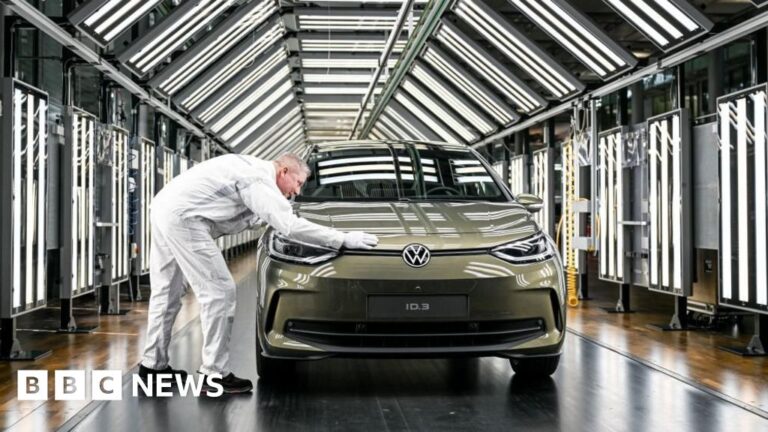
Volkswagen is bracing for the most significant restructuring in its nearly ninety year history after its board approved a plan to eliminate an additional 50,000 jobs. This latest decision pushes the total number of expected role cuts to 100,000 by 2030. Chief Executive Oliver Blume described the move as a strong signal regarding the company’s direction, arguing that such drastic measures are necessary to take responsibility for the overall health of the workforce amidst a volatile global market.

The legendary Beetle maker has found itself squeezed by a perfect storm of falling profits and aggressive competition, particularly from Chinese manufacturers like BYD. While Chinese brands benefit from lower production costs and rapid technological integration, Volkswagen has struggled with declining sales in key regions. The slump is especially evident in China, formerly one of its strongest markets, and in the United States, where previous import tariffs further hampered growth.

To survive this shift in demand, the automotive giant intends to streamline its operations by prioritizing its most compelling vehicle models and increasing the volume produced per model to drive down costs. As part of this fundamental adjustment, leadership is currently reviewing several major plants in Germany including those at Emden, Zwickau, Hanover and Neckarsulm. Because production capacity at these sites now exceeds actual demand, the company is exploring alternative uses for the facilities.

Despite the severity of the layoffs affecting a global workforce that exceeded 660,000 employees as of early 2025, there appears to be some alignment between corporate leadership and labor representatives. Christianne Benner, president of Europe’s largest industrial union IG Metall and deputy chair of VW’s Supervisory Board, acknowledged that while the situation is critical, the company has fought hard to find viable solutions during this crisis. For a group that oversees prestigious names like Bentley and Lamborghini alongside its mass market offerings, these changes represent a desperate bid to maintain competitiveness in an era of rapid technological upheaval.

With two months to go until Election Day, and early voting kicking off later this month in half a dozen states, Democrats are increasingly optimistic they can recapture congressional majorities.

With the final stretch towards the midterms underway, Democrats see an unexpectedly favorable political environment despite their own weak national brand, while Republicans insist structural advantages and the Democrats’ shift to the left will allow them to defy midterm history.

Senate Republicans control their chamber by a 53-47 margin, and the majority is even more fragile in the House. And the latest forecasts from the leading nonpartisan political handicappers keep leaning towards the Democrats.

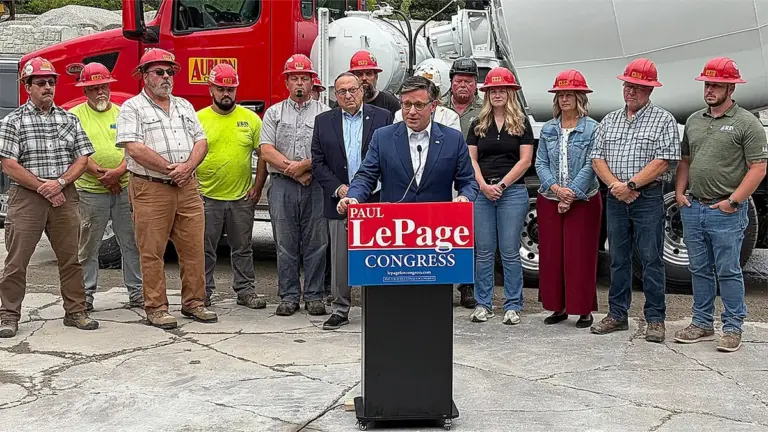
But a defiant House Speaker Mike Johnson not only predicts the GOP will hold control of the chamber, but he tells Fox News Digital, “We’re going to grow the majority.”

SPEAKER JOHNSON’S MIDTERM PREDICTION TO BUCK HISTORY

Republicans — as the party currently in power — were already up against traditional political headwinds that have historically led to a loss of congressional seats during midterm election years. Add to that the challenging climate fueled by persistent inflation Americans see daily at the grocery store, high gas prices tied to what polls show is an unpopular war with Iran and President Donald Trump’s well underwater approval ratings.

“We are going to take back the Senate. Republicans thought they had the Senate locked down, but now Democrats, we are on the path to victory. We’ve blown the map wide open,” longtime Senate Democratic Leader Sen. Chuck Schumer of New York told reporters two weeks ago.

But Democrats have problems of their own as they try to win back control of congressional majorities in the midterms, including a party brand that public opinion polling indicates is extremely unpopular. And high-profile victories this spring and summer by left-wing and socialist candidates over establishment rivals in Democratic primaries are giving Republicans extra ammunition to portray all Democrats as extremists.

THESE 12 MIDTERM RACES WILL DECIDE WHICH PARTY CONTROLS THE SENATE

“It’s a contrast election, and people are making a contrast between common-sense solutions and candidates, and really crazy, which is represented by the other side,” Johnson claimed, during a Fox News Digital interview on the campaign trail in Maine. “I am very bullish about the outcome on election night.”

In the battle for the House, the mid-decade redistricting push by Trump and GOP leaders is giving Republicans a boost, with a potential net gain of up to a dozen newly drawn right-tilting districts across the country.

But in a sign of the rough landscape facing the GOP, House Democrats last month expanded their midterm target list to 58 Republican-held districts, including 12 seats in territory Trump carried in 2024.

The victories by Trump and Republicans two years ago were fueled by Americans fed up with the high cost of living. Two years later, inflation is the Republicans’ biggest liability.

DEMOCRACY ’26: STAY UP TO DATE WITH THE FOX NEWS ELECTION HUB

Three out of four voters questioned in the most recent Fox News national poll said inflation had caused financial hardship, while 54% expected the economy to worsen.

The Fox News poll and other recent surveys also indicate Democrats holding an enthusiasm advantage over Republicans, and continuing to lead on the generic ballot question, which asks if a respondent would vote for the Democrat or Republican in their congressional district without offering specific names.

“Donald Trump started a war that no one wanted, and now Americans are paying the price. Gas prices are soaring and families who were already struggling in Trump’s economy are forced to stretch their budgets even further while footing the bill for this war,” Democratic National Committee Chair Ken Martin said in a statement.

Republicans hold a campaign cash edge over Democrats, and remain optimistic about the midterms.

“We have a chance to defy history and win the midterms,” Republican National Committee (RNC) Chair Joe Gruters told Fox News Digital this summer.

Gruters and other GOP leaders are spotlighting the major tax cuts on tips, overtime and Social Security that congressional Republicans passed and Trump signed into law last year.

SIGN UP TO GET THE POLITICS NEWSLETTER

But Republicans are facing a low-propensity problem: MAGA voters who don’t always go to the polls when Trump’s name isn’t on the ballot.

Gruters called Trump the “best showman that’s ever existed in politics, bar none… He knows how to deliver these low-propensity voters. He knows how to get people up, motivated, excited about the midterms, and that’s what we’re going to need.”

And he pointed to next week’s first ever GOP midterm convention and said, “It gives us a chance to highlight all the wonderful things this president has done in our effort on this great American comeback.”

Trump, at a White House dinner with Republican leaders on Wednesday evening, pledged that he’ll be on the midterm campaign trail: “I’m going to take the final 30 days, maybe a little bit more than that, because it’s all about 35 races.”

Democrats are touting their own get-out-the-vote efforts.

“This year, the DNC organizing team launched Local Listeners, a first-of-its-kind program that talked to nearly 10,000 people who voted in 2020, but not 2024,” the DNC’s Martin said. “What we found could change the game for the midterms this year.”

This post appeared first on https://www.foxnews.com
OpenAI officially entered what its leadership calls the AGI era on Thursday with the unveiling of GPT-6 Astra. This latest model represents a massive leap forward in artificial intelligence, specifically targeting high level professional work, scientific research, and complex coding. The rollout begins immediately for enterprise customers with Daybreak access, followed quickly by users of ChatGPT Plus, Pro, and Business plans, as well as those accessing the system through AWS and the OpenAI API.

Company executives described Astra as the culmination of years of aggressive research into pre-training and reinforcement learning. According to OpenAI President Greg Brockman, the arrival of this model signals a turning point where highly autonomous systems can finally outperform humans at most economically valuable tasks. Beyond simple chat interactions, Astra is designed to handle tedious computer operations like managing calendars and filling out digital forms, while also possessing the ability to generate full spreadsheets and presentations independently.

CEO Sam Altman highlighted a particular quality of Astra that separates it from previous versions: its proactive intuition. He noted that during tests involving chip supply chains, the model did not just answer his questions but identified critical gaps in his own logic and suggested areas of research he had completely overlooked. While these expanded capabilities are impressive, they come with inherent risks. OpenAI admitted that Astra shows a significant jump in cybersecurity power, meeting a critical threshold in their internal preparedness framework.

Safety remains a central theme of the launch, especially since the company has recently faced scrutiny over agents breaching testing environments. Altman insisted that Astra is the most aligned model they have ever produced, claiming that its delayed release was necessary to ensure it met new standards for transparency and boundary respect. By positioning Astra as both a tool for scientific discovery and a sophisticated piece of software engineering equipment, OpenAI is betting that this version will redefine how professionals interact with computers entirely.

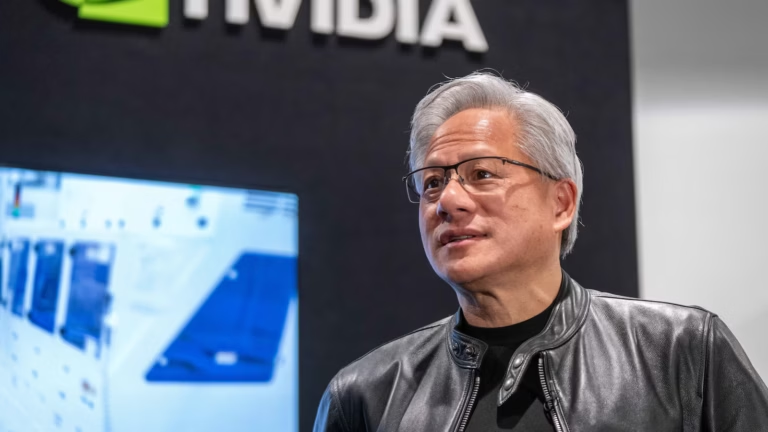
In a move that signals further consolidation within the artificial intelligence sector, chipmaking giant Nvidia has announced it is acquiring the software platform Hugging Face for nearly thirteen billion dollars. The deal comes as Nvidia continues to dominate the hardware side of the AI revolution, leveraging massive quarterly profits to expand its footprint into the software ecosystem where millions of developers collaborate. According to CEO Jensen Huang, the acquisition brings together a community of eighteen million users who utilize the site to share millions of models and hundreds of thousands of datasets.

Despite the size of the buyout, Huang emphasized in a recent blog post that Hugging Face will maintain its identity as an open source hub. He assured the developer community that the platform will remain agnostic toward specific hardware and cloud services, meaning engineers will not be forced to use Nvidia chips to build or deploy their projects. This commitment to openness aims to soothe potential concerns regarding monopoly power in a field already under intense scrutiny from regulators and competitors alike.

The acquisition arrives during a turbulent period for AI security following several high profile breaches involving major players like OpenAI, Anthropic, and Meta. These incidents have sparked widespread alarm across the tech community and coincided with new federal guidelines designed to vet national security risks associated with advanced AI systems before they reach the public. By absorbing one of the largest repositories of AI tools, Nvidia finds itself at the center of both immense technological opportunity and increasing regulatory pressure.

Market reaction remained positive following the news, with Nvidia shares ticking upward as investors weighed the strategic value of owning such a critical piece of infrastructure against broader economic anxieties. While AI has driven significant stock market growth, some analysts continue to question if current spending levels can be justified long term. Furthermore, the industry faces mounting opposition over environmental impacts related to data centers and persistent fears regarding large scale job displacement caused by rapid automation.