
Author

admin

Browsing

Investors poured back into ChargePoint on Thursday, sending the company’s stock soaring more than 70 percent following a second-quarter financial report that comfortably cleared Wall Street’s hurdles. The electric vehicle charging firm reported revenue of 116.1 million dollars for the period ending July 31, marking an 18 percent increase over the previous year and significantly beating the 105.2 million dollars analysts had predicted. Even more impressive was the bottom line, where ChargePoint posted a GAAP loss of just 35 cents per share, far better than the estimated loss of 85 cents.

The rally was fueled by strong signs of operational recovery and narrowing losses. Gross margins rose to 36 percent, and while this figure included a one-time tariff refund of about 4.2 million dollars, the company noted that its normalized margins would have still hit record highs regardless. Net losses also shrank considerably, dropping to 35.6 million dollars from last year’s loss of 66.2 million dollars during the same window. This trend suggests that ChargePoint is successfully executing a multi-year strategy designed to curb cash burn and steer the organization toward profitability.

Chief Executive Officer Rick Wilmer described the results as an exceptional turning point for the business, suggesting that the sudden surge in stock price is merely the start of a larger upward momentum. Unlike many competitors who manage their own stations, ChargePoint focuses on selling hardware and software to third party organizations, a model Wilmer believes will accelerate thanks to new product launches. With consecutive quarters of growth now under its belt, leadership says they are rapidly closing in on EBITDA profitability.

Looking ahead, ChargePoint provided a third-quarter revenue guidance range between 105 million and 115 million dollars through October 31. Beyond the balance sheet, the company continues to expand its footprint via strategic partnerships, including an extension of its deal with Mercedes-Benz for European fleet operators and a fresh installation project at Portland International Airport. These moves signal that despite broader volatility in the EV sector, ChargePoint is finding stability through infrastructure expansion and tighter fiscal discipline.


Wall Street saw a significant boost today as investors shifted their focus back toward growth, sparked largely by a strong showing from cloud data giant Snowflake. The software company acted as a catalyst for a broader rally across the tech sector, lifting spirits among traders who had been cautious about valuations in recent weeks. This surge suggests a renewed appetite for high growth software plays, as market participants react positively to signs of resilience in enterprise spending on digital infrastructure.

While the equity markets climbed, the bond market told its own story. Treasury yields slid lower throughout the session as traders braced themselves for the upcoming monthly jobs report. A dip in yields often reflects a defensive posture or anticipation that labor market cooling could influence the Federal Reserve’s next move regarding interest rates. By pulling back on yields now, investors seem to be pricing in various scenarios ahead of what is widely expected to be a volatile set of employment numbers.

The intersection of these two trends creates an interesting dynamic for the current trading environment. While the momentum in software stocks provides an immediate lift to indices, the underlying anxiety surrounding economic data remains present. Analysts suggest that while individual corporate wins like those seen at Snowflake can drive short term gains, the long term trajectory will likely depend on whether the labor market stays balanced enough to allow for steady monetary policy changes.

As the closing bell approached, the overall mood remained optimistic but tentative. Traders are keeping a close eye on how much of this rally is driven by genuine fundamental strength versus tactical positioning before Friday’s big announcement. For now, however, the combination of falling yields and a glowing tech sector has given shareholders plenty of reason to cheer during another active day on the exchange.

As the United States approaches another election cycle, the digital assets industry is signaling that it has moved beyond the era of speculative hype and is now focused on integration into the global financial system. Blockchain technology, stablecoins, and tokenization are no longer fringe experiments but are becoming part of the core plumbing of finance. However, industry leaders warn that while conversations in Washington have become more sophisticated, a persistent lack of regulatory durability continues to hinder growth. The primary demand from investors and founders alike is not necessarily for lighter regulation, but for a predictable framework that survives changes in presidential administrations.

From an investment standpoint, the current climate of regulatory flip-flopping creates a risky environment for venture capitalists and asset managers who operate on five to ten year horizons. Utkarsh Ahuja of Moon Pursuit Capital argues that resolving fundamental questions about asset classification and the overlapping jurisdictions of the SEC and CFTC is essential for long term stability. He suggests that if Congress can provide clear boundaries rather than shifting targets, it will encourage institutional capital to flow into the U.S. market. The goal is for America to be seen as the most credible and predictable jurisdiction, ensuring that talent and innovation stay within domestic borders rather than migrating to more certain overseas environments.

Beyond high level policy, entrepreneurs are calling for practical relief from the crushing weight of compliance costs. Ryan Kirkley of Global Settlement Network emphasizes that ambiguity acts as a hidden tax on every startup, forcing young firms to divert precious early capital toward legal fees instead of product development. His proposals include the creation of federal regulatory sandboxes where startups can test new settlement infrastructure under supervision without requiring a massive corporate budget. Additionally, there is a strong push to modernize payment rail access so that emerging fintechs can connect directly to financial infrastructure rather than relying solely on established megabanks.

Finally, technical experts are urging lawmakers to avoid broad brushstrokes that could accidentally stifle niche innovations like decentralized physical infrastructure networks. Parth Kapadia of OpenVPP notes that applying legacy security laws to micro payments or digital receipts for renewable energy would make many sustainable tech projects economically unviable. Specifically, he advocates for confirming that tokens representing physical performance belong in the commodity category rather than securities. By refining tax treatments for machine scale payments and clarifying how small scale earners are handled, Congress could ensure that technical progress isn’t smothered by administrative red tape before it ever reaches maturity.

Trade relations between Canada and the United States have hit a volatile patch, leaving many wondering which industries will survive the fallout. After high stakes trade talks collapsed on August 21, Washington slapped a fifty percent tariff on twenty eight billion Canadian dollars worth of goods. Ottawa is preparing its own retaliatory measures for September 8, creating an atmosphere of uncertainty that now threatens to spill over into some of North America’s most essential resource sectors.

Among the commodities currently caught in the crossfire, potash stands out as a critical vulnerability for the United States. Because Canada provides roughly eighty percent of all U.S. potash imports, the fertilizer is indispensable to American farmers who rely on it during peak planting seasons. While energy and potash have managed to avoid tariffs thus far, industry experts warn that this immunity might be temporary. Josh Linville, Vice President of Fertilizers at StoneX, suggests that while these materials are arguably too important to tax, there is no guarantee they will remain exempt as political tensions mount ahead of the U.S. midterm elections.

The strategic importance of potash has already turned it into a potential bargaining chip within Canadian politics. Some officials have openly discussed using the export as leverage against Washington, with Ontario Premier Doug Ford bluntly stating that the American agricultural sector would suffer immensely if Canada were to cut off the supply. This pressure is compounded by global shortages of alternative phosphates and sanctions on Russian and Belarusian supplies, meaning the U.S. has virtually nowhere else to turn for its nutrient needs.

However, utilizing such heavy handed tactics remains a risky gamble for Ottawa. Many Canadian leaders fear that weaponizing resources would jeopardize thousands of domestic jobs and alienate their largest customer. Both Prime Minister Carney and Saskatchewan Premier Scott Moe have pushed back against using energy or minerals as negotiation tools, opting instead for targeted responses like tariffs on alcohol. For now, Canada appears to be playing a waiting game, hoping that stability returns before the upcoming election cycle forces another round of aggressive trade maneuvers.

A Washington City man is heading to prison after orchestrating a massive investment scam that stripped hundreds of people of their savings. Matthew Shane Perkins, 47, was sentenced to 15 years behind bars following his guilty plea to wire fraud charges. The court has ordered him to pay back more than 77 million dollars in restitution to the roughly 200 investors who fell victim to his elaborate scheme.

Perkins built his facade by branding himself as a brilliant trader capable of consistently beating the market with almost no losses. Operating under Forged Oak LLC, he partnered with another firm called RentDue Capital LLC, which used social media and public meetings to recruit unsuspecting clients into three different funds. Once the money reached RentDue Capital, it was handed over to Perkins, who claimed he would grow the wealth through aggressive day trading.

In reality, much of the capital vanished through poor trades or was simply stolen by Perkins to fund a lavish lifestyle. While he told investors their portfolios were soaring, he was actually falsifying daily performance reports and altering brokerage statements to hide the truth. In one instance toward the end of his scheme in late 2025, Perkins presented documents claiming the funds held over 133 million dollars when there was actually less than 13 million remaining.

Prosecutors revealed that while his clients believed their futures were secure, Perkins was spending their money on high end luxuries. His shopping list included a new home down payment, a private cabin, several luxury vehicles, and even an airplane. He further indulged in extravagant experiences, including an eighty thousand dollar hunting trip in British Columbia, all financed by the misappropriated funds of those who trusted him with their life savings.

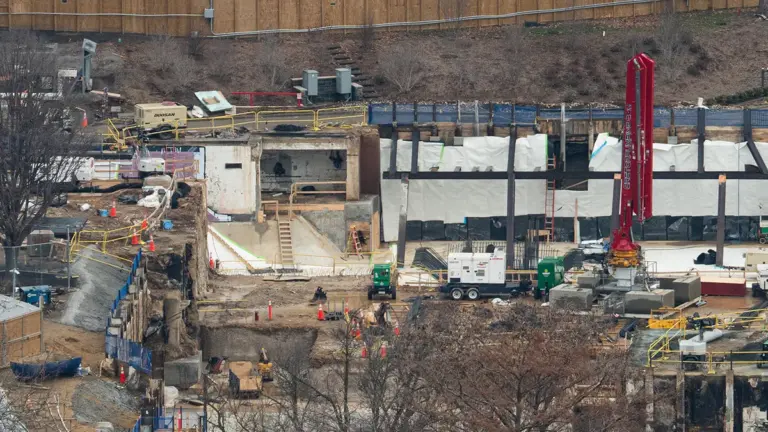
Americans remain starkly divided on whether President Donald Trump should be allowed to build a ballroom on the site of the White House’s East Wing, according to people who spoke with Fox News Digital last week.

Trump has called the ballroom an improvement and a necessity for the White House, arguing it would help avoid another near-death experience for himself, the press and dignitaries after a gunman charged into the Washington Hilton during the White House Correspondents’ Association Dinner in May.

“No, definitely not,” Frank of Kansas City, Missouri, said of the ballroom project’s necessity.

WHITE HOUSE CORRESPONDENTS’ DINNER SHOOTING SHARPENS FOCUS ON TRUMP’S BALLROOM CONSTRUCTION PROPOSAL

“Tearing down the East Wing without all proper authorizations was improper. The way the money is being raised is improper, so I’m ‘no’ to all of it.”

Frank appeared to allude to the litigation the administration is fighting to keep its project afloat.

APPEALS COURT LETS TRUMP RESUME WHITE HOUSE BALLROOM CONSTRUCTION, SEEKS LOWER COURT CLARITY

Danisha from Washington, however, said she approved of the new project in her hometown.

She professed to be an ardent supporter of Trump’s and said he deserves to have a ballroom.

“I think the White House definitely should use the ballroom to be beautiful and nice. Because, I think that the president should be able to have fun and invite people to the ballroom,” she said.

Sherry and Bill from Knoxville sided with the president on the project:

Bill called the U.S. the “greatest country in the world” and therefore a ballroom for the president is a great idea.

TRUMP’S WHITE HOUSE BALLROOM CONSTRUCTION GETS ANOTHER LIFELINE FROM SCOTUS AMID HEATED LEGAL FIGHT

SIGN UP TO GET THE POLITICS NEWSLETTER

“It’s brilliant,” Sherry added. “We need it.”

“Who cares who’s in the administration, Democrat or Republican? They’re gonna use the ballroom,” Bill said. Sherry noted the ballroom is privately funded, suggesting that aspect should assuage tax-sensitive critics.

Meanwhile, Chuck from Washington called the ballroom a “horrible idea” in the present and in the future.

“There’s so much more we have to tackle. And building a ballroom should not be a priority one or a priority two,” he said.

As of Monday, the Supreme Court allowed construction to proceed as litigation makes its way through the appeals process, with plaintiffs seeking relief from the high court if it chooses to hear the full case, according to reports.

This post appeared first on https://www.foxnews.com

The race for New Hampshire’s second congressional district took a sharp turn toward ethics and financial transparency during a recent Democratic primary debate. Incumbent Representative Maggie Goodlander and her challenger, Paige Beauchemin, faced off over one of the most contentious issues currently facing Washington: whether members of Congress should be prohibited from trading individual stocks while in office. While both candidates expressed support for the general concept of a ban, the conversation quickly shifted from theoretical agreement to the gritty details of implementation.

Much of the discussion centered on how such a law could actually be policed effectively without becoming another toothless regulation. The candidates sparred over specific enforcement mechanisms, debating whether blind trusts would be sufficient or if more aggressive oversight committees were necessary to prevent insider trading. For voters in the second district, the exchange highlighted a growing appetite for reforms that decouple personal profit from legislative decision making.

As the campaign continues to heat up, this focus on lawmaker accountability suggests that ethical standards may play a pivotal role in determining who secures the nomination. Both Goodlander and Beauchemin attempted to position themselves as champions of integrity, but their differing views on enforcement revealed deeper disagreements about how to hold powerful officials accountable once they reach Capitol Hill. With the primary approaching, these questions of trust and transparency remain at the forefront of the democratic contest.

The US Department of War is investing roughly 174 million dollars into Alcoa’s Wagerup alumina refinery in Western Australia to establish a new gallium production facility. Managed through the Industrial Base Analysis and Sustainment program, this move is designed to shore up the defense industrial base by securing a steady flow of critical minerals. The project represents a broad international effort, bringing together the governments of Japan and Australia along with the Sojitz Corporation to reduce reliance on external markets and bolster shared economic resilience.

Once completed, the facility is expected to produce 100 metric tons of gallium annually. While gallium is relatively common in the earth’s crust, it rarely appears in concentrated deposits, making it difficult to mine directly. Instead, it is extracted from bauxite during the alumina refining process. This makes Alcoa’s operation near Perth an ideal hub for production, especially as gallium remains indispensable for high-tech applications like LEDs and high-speed semiconductor chips used in modern weaponry and electronics.

Michael Cadenazzi, the Assistant Secretary of War for Industrial Base Policy, described the agreement as a landmark step toward ensuring collective security between the three allied nations. By diversifying where these materials are sourced, the partner countries hope to break current monopolies on the global gallium market and build a more stable supply chain that can withstand geopolitical volatility.

Beyond the strategic military implications, the project promises a modest boost to the local economy in Western Australia. Alcoa anticipates that construction will generate around 200 temporary jobs, followed by approximately 20 permanent positions once the plant becomes fully operational. For Alcoa Australia President Elsabe Muller, the venture marks a significant opportunity to play a leading role in stabilizing one of the world’s most unsung yet essential critical minerals.

FIRST ON FOX: The nationwide battle over how and when Americans can vote has hit Capitol Hill, with two allies of President Donald Trump unveiling a new proposal they say will help restore confidence in U.S. elections.

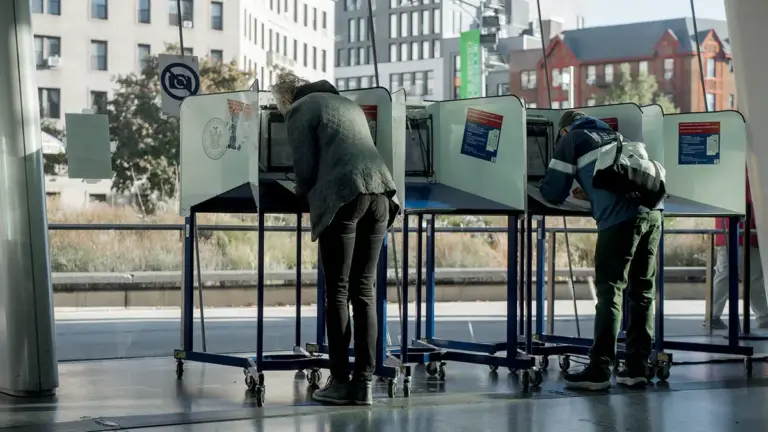
Rep. Laurel Lee, R-Fla., plans to introduce legislation on Thursday mandating that absentee and mail-in ballots are received by the relevant officials by the end of the day on Election Day. A corresponding bill is being led in the Senate by Sen. Ashley Moody, R-Fla.

“This is something that we’ve done in Florida for many years, and it’s a really effective way of making sure that elections stay organized and that we have timely election results,” Lee told Fox News Digital.

SUPREME COURT RULES ON MAIL-IN BALLOTS RECEIVED AFTER ELECTION DAY

Lee is Florida’s former top elections official, having served as its secretary of state from 2019 until May 2022.

“Florida is proof-positive that this works, that it does not deny any voter the right to vote. Our job as elected officials or as elections officials throughout the states is just to make sure that voters know the deadlines, that they know the rules and tell them your ballot has to be received,” Lee said. “They can do that just as easy as they can get it postmarked by Election Day.”

TRUMP SCORES SUPREME COURT WIN ON MAIL-IN VOTING RESTRICTIONS BEFORE MIDTERMS

It follows an executive order Trump issued in March 2025 essentially setting an Election Day deadline for when mail-in ballots can be received.

If passed, the legislation could have a significant impact on millions of Americans, nearly a third of whom vote by mail.

FEDERAL JUDGE BLOCKS TRUMP ADMINISTRATION FROM RESTRICTING MAIL-IN BALLOTS AHEAD OF MIDTERMS

However, the topic of mail-in ballots has been a political lightning rod that’s divided the GOP. Republicans in states where voting by mail is popular have expressed concern about changing the current system ahead of November.

But Lee argued her bill does not curb people’s ability to vote by mail.

REPUBLICAN SAYS TRUMP’S TOP ELECTION PRIORITY ‘DEAD’ IN SENATE AS GOP FRACTURES AHEAD OF MIDTERMS

“One thing that’s important to understand about this bill is that it doesn’t limit voting by mail. It simply says that for states who allow mail voting, ballots must be received by Election Day,” she said. “So it still keeps all of those options that states have chosen to implement on the table for them. It just creates a different deadline.”

Moody told Fox News Digital of the bill, “The Ballots by Election Day Act is a simple fix to rebuild trust in elections. The fact that some states allow ballots to pour in for days after an election is absurd.  Passing our Ballots by Election Day Act would deliver results before bed.”

Meanwhile, a separate Trump order making significant changes to the mail-in voting system is currently at the center of a dramatic legal battle between the White House and over 20 states.

That order would create new hurdles for the U.S. Postal Service and other agencies to verify proof of citizenship before delivering ballots, as well as mandate the use of specific stationery denoting federal election mail.

Supporters of the rule have argued it’s key to enhancing voter confidence in elections, while opponents have said it would do the opposite by sowing chaos in the current system.

This post appeared first on https://www.foxnews.com

The worlds largest battery maker, Contemporary Amperex Technology Co., known as CATL, has been forced to suspend operations at its Jianxiawo lithium mine after Chinese regulators revoked the sites environmental approval. This move effectively stalls what was intended to be Chinas most productive lithium operation by capacity. While the company had briefly attempted to resume activities following a safety permit issued in late June, reports indicate that an unresolved conflict involving a tailings pond led to more than 70 formal complaints, ultimately triggering the government intervention in early August.

The fallout from the shutdown has already impacted industry expectations. Benchmark Mineral Intelligence reacted to the news by slashing its 2026 output forecast for the project by nearly half, dropping projections from 62,500 tons of lithium carbonate equivalent down to 32,000 tons. Although long term forecasts for 2027 remain steady for now, analysts warn that the required environmental review process could drag on well into next year. The facility has struggled with permitting issues since mid 2025, coinciding with Beijings introduction of much stricter classification standards for lithium bearing clay deposits.

This regulatory setback comes at a precarious time as global demand for lithium begins to surge once again. After a significant crash in prices following a peak in 2022, companies like Albemarle have reported skyrocketing demand specifically within the stationary battery storage sector. This shift has caused volatility in the markets, leading the Guangzhou Futures Exchange to implement caps on new positions and raise trading fees to stabilize sharp price swings fueled by investor anticipation.

Beyond CATL, there are concerns that this crackdown signals a broader trend across Jiangxi province. Local authorities are currently auditing mining licenses throughout the region, leaving other operators vulnerable if they share similar waste management deficiencies. To hedge against these domestic risks, CATL is diversifying its supply chain through international investments, including a recent strategic stake in New Zealands CarbonScape to develop sustainable alternatives for battery anodes.