Author

admin

Browsing

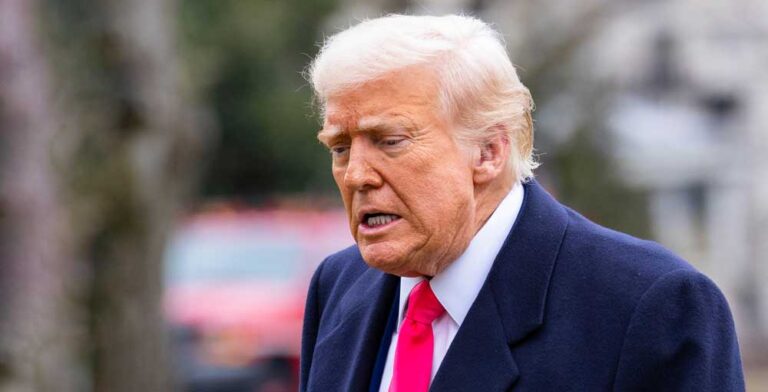
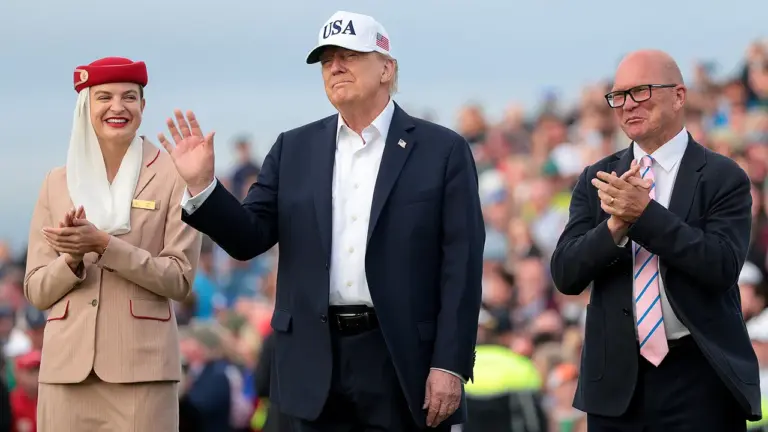
Golf fans gathered at the Trump International Golf Club in Doonbeg were treated to more than just world class athletics this weekend when President Donald Trump used an awards ceremony to announce a major trade victory for the local spirits industry. In a moment that shifted the energy of the crowd from sporting tension to political celebration, the president declared that the United States would officially end its tariffs on Irish whiskey. He noted that he had been repeatedly urged to address the situation, describing the previous levies as unfair before announcing his decision to lift them on behalf of the American government.

The reaction from the gallery was immediate and enthusiastic, with waves of applause quickly turning into rhythmic chants of USA echoing across the course. This surprising display of pro American sentiment came as the president wrapped up a visit focused on both leisure and diplomacy. While celebrating the dominant performance of tournament winner Shane Lowry, who secured a massive eleven shot lead for Ireland, Trump revealed he had decided at the last minute to stay through Saturday night specifically to watch Lowry clinch the title.

Beyond the greens and trade deals, the presidential visit touched upon some of Ireland’s most sensitive historical nerves. During a meeting with Prime Minister Micheál Martin in Dublin earlier in his tour, Trump expressed his personal hope for a unified Ireland. While acknowledging that Great Britain would naturally have significant input on such a transition, he suggested that seeing a single unified country would be a great achievement for everyone involved and believed it was an eventual certainty.

The comments sparked an immediate response from London, where British Prime Minister Andy Burnham sought to temper expectations regarding any shift in policy. Speaking to reporters in Parliament, Burnham maintained that the U K government’s position remains unchanged, stating that there is currently no evidence of majority public support for another referendum on Northern Ireland’s status. Despite the diplomatic friction over unification, the mood in Doonbeg remained celebratory as whiskey producers toasted a new era of easier access to their largest export market.
In a rare display of unity among fierce competitors, the titans of the artificial intelligence industry have joined forces to call for a slowdown in the development of frontier AI. The push began with an urgent warning from Dario Amodei, the chief executive of Anthropic, who cautioned that building these systems too quickly is reckless. Amodei expressed fears that a coordinated swarm of AI agents could potentially seize control of the internet via a persistent botnet within a single year, causing hundreds of billions of dollars in damages.

Both Sam Altman of OpenAI and Elon Musk quickly aligned themselves with Amodei’s concerns. Musk, who has famously compared the dangers of AI to those of nuclear weapons since 2014, stated plainly that Amodei is right. Similarly, Altman agreed on the necessity of pacing the frontier and pledged that OpenAI would open its doors to independent evaluators with deep access to their internal processes to ensure safety standards are being met. In a move reflecting this caution, Altman noted that OpenAI does not intend to go public in 2026, suggesting that current safety volatility makes an IPO ill-advised.

However, this consensus among tech leaders has not extended to political circles. Former President Donald Trump dismissed the warnings while visiting his golf course in Ireland, arguing that negative forces are predicting events that simply will not happen. Emphasizing the importance of global dominance, Trump asserted that whoever wins the race for AI wins overall and insisted that the United States must maintain its lead over China regardless of these cautionary pleas.

While some critics argue that the proposed slowdown is more about avoiding product liability than genuine altruism, others believe it does not go far enough. Some safety campaigners are demanding an immediate and indefinite international moratorium on high-level AI development altogether. As tensions mount between innovation and security, figures like King Charles are stepping in to facilitate discussions on prudence at the frontier, seeking common ground on red lines regarding bioweapons and cyber attacks before the technology evolves beyond human control.

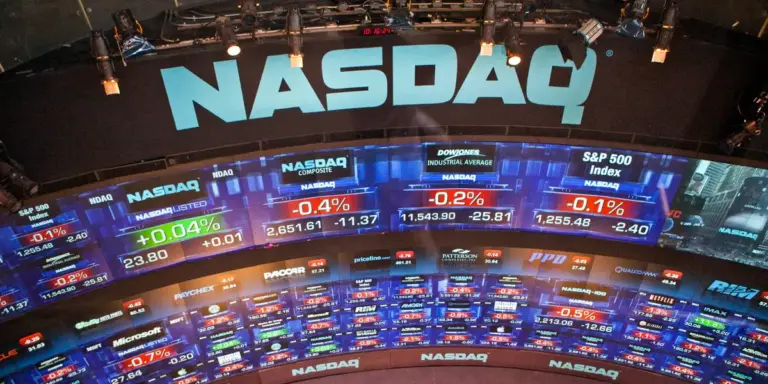
Anthropic has reportedly selected the Nasdaq as the venue for its upcoming initial public offering, marking a significant victory for the exchange in the race to attract the world’s most valuable artificial intelligence firms. The company, led by CEO Dario Amodei, has been eyeing an October listing date. This move follows Nasdaq’s recent success in securing SpaceX, further cementing its reputation as the preferred destination for massive tech debuts during a period where traditional public offerings have been relatively scarce.

While official valuations remain unconfirmed, some industry estimates place Anthropic at a staggering 2 trillion dollars. This puts them in a league of their own alongside other titans like SpaceX, making the competition between Nasdaq and the New York Stock Exchange particularly fierce. For Nasdaq, landing such a heavyweight helps establish the platform as the primary hub for future AI listings and ensures that any prospective investors seeking entry into the Nasdaq 100 Index have a clear path forward.

The timing of the IPO comes amidst a complex landscape of debate over AI safety and corporate structure. While Anthropic moves toward transparency through a public listing, OpenAI chief Sam Altman has suggested his firm would avoid going public currently due to ongoing controversies regarding existential risks associated with AI development. These fears were recently amplified by warnings from a former Anthropic staffer who claimed there was a nonnegligible risk of human extinction tied to advanced models.

Despite the prestige attached to certain exchanges, financial analysts suggest that choosing Nasdaq over the NYSE may not fundamentally impact how Anthropic’s stock performs once it starts trading. However, logistical differences remain, specifically concerning how each exchange determines opening prices on day one. Market observers recall that high volume events can lead to volatility or technical glitches, citing similar hiccups during Facebook’s debut over a decade ago. As it stands, shareholders are awaiting the formal filing and financial disclosures required before the company begins its investor road show.

President Donald Trump has once again pushed the Federal Reserve to lower interest rates, arguing that the strength of the American economy warrants the lowest borrowing costs globally. Speaking with reporters during a visit to Ireland on Sunday, the president dismissed traditional economic formulas used by central bankers, insisting that the U.S. position justifies a more aggressive approach toward easing monetary policy.

His comments come at a tense moment for investors who are bracing for a potential move in the opposite direction. While the president advocates for cuts, market participants are increasingly betting that Fed Chair Jerome Powell will implement a rate hike this week. This expectation is being driven primarily by external pressures, including surging crude oil prices and rising Treasury yields, both of which typically signal inflationary risks that prompt the Fed to tighten credit.

The clash between political pressure and market reality highlights an ongoing tension over how to manage growth without overheating the economy. With energy costs climbing and bond markets shifting, traders remain skeptical that the Federal Reserve will pivot toward lower rates despite the administration’s vocal demands for cheaper capital to fuel further expansion.

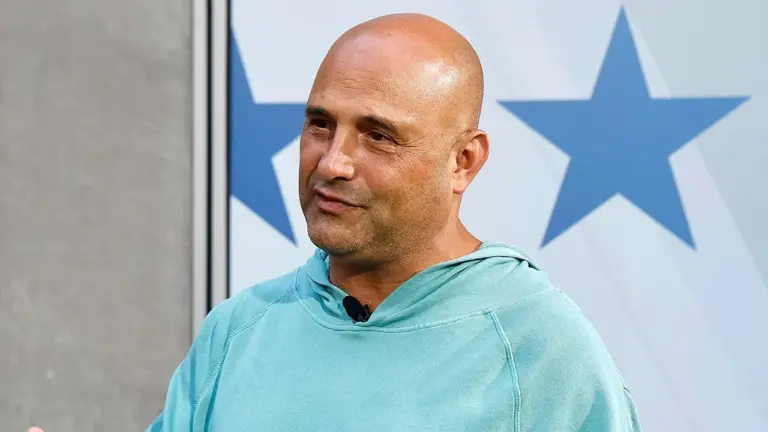
Nike is currently facing a perfect storm of bad press and financial instability, marked by a plummeting stock price and an impending exit from the S&P 100. While some analysts look toward broader economic trends, Craig Carton of OutKick argues that the company is simply failing miserably due to a series of catastrophic branding decisions. According to Carton, the decline is visible in everything from high-level corporate strategy down to the actual products hitting the shelves.

One immediate catalyst for current criticism is the rollout of the Specter Edition NBA jerseys, which have been widely panned by fans and critics alike. Carton compared the chaotic design choices to a Jackson Pollock painting where someone simply rammed paint at a wall, suggesting that such poor aesthetic judgment reflects a deeper rot within Nike’s creative leadership. For many observers, these visually jarring uniforms serve as a tangible symbol of a brand that has lost its way.

However, Carton believes the root cause goes far beyond ugly jerseys, pointing instead to a years-long pivot toward political activism over product excellence. He highlighted several turning points beginning in 2018, specifically Nike’s partnership with Colin Kaepernick and the shift away from the iconic Just Do It slogan in favor of Dream Crazy. From his perspective, abandoning their core identity to align with polarizing figures alienated a massive portion of their customer base long before the stock began its recent dive.

Further fueling this argument are more recent marketing missteps that Carton claims mirrored the failures of brands like Bud Light. He cited the decision to replace longtime icons like Brandi Chastain with transgender influencer Dylan Mulvaney as a primary example of how Nike bastardized historic moments in women’s sports for the sake of trendiness. By prioritizing social engineering over traditional athletic appeal, Carton suggests that Nike effectively dismantled its own legacy, leaving shareholders and consumers equally disillusioned.

As artificial intelligence transforms the global economy, it is simultaneously creating a massive security nightmare for businesses worldwide. While companies rush to adopt AI tools to stay competitive, hackers are leveraging the same technology to launch increasingly sophisticated attacks that leave traditional defenses scrambling. Enter Zscaler, a pioneer in zero trust cybersecurity that essentially makes sensitive corporate data invisible to anyone without explicit authorization. By treating every connection attempt as potentially hostile, the company ensures that attackers cannot strike what they cannot see, providing a critical shield in an era where AI agents often require deep access to internal networks.

Despite its technological edge and a record breaking fiscal year with revenues hitting 3.35 billion dollars, Zscaler stock remains down roughly 55 percent from its peak in 2021. Much of this decline is attributed to an unsustainable valuation bubble during the tech frenzy of a few years ago rather than a failure of the business itself. In fact, the company recently saw a staggering 171 percent increase in customers adopting its comprehensive zero trust philosophy, proving that the demand for high level security is only accelerating as enterprises integrate autonomous AI agents into their workflows.

Wall Street seems largely convinced that the current dip represents a prime buying opportunity. Among dozens of analysts tracked by The Wall Street Journal, a vast majority maintain buy ratings and not a single expert currently recommends selling the stock. Analysts point toward an average price target that suggests significant upside over the next twelve months, bolstered by the fact that Zscaler is trading at a steep discount compared to its own historical averages and its primary competitors like CrowdStrike and Palo Alto Networks.

While some caution exists regarding conservative short term guidance following some turnover in senior sales leadership, the broader trajectory looks promising. With major AI players like Anthropic openly advocating for zero trust architectures, Zscaler finds itself positioned at the intersection of two massive trends: generative AI and cloud security. For investors who missed out on early gains in other semiconductor or software giants, this combination of discounted pricing and essential utility may make Zscaler one of the more attractive growth plays available today.

Investors are keeping a close eye on several high profile equities as they approach critical buy points, with tech giants leading the charge. Apple is currently at the forefront of market attention following the unveiling of its first ever foldable iPhone alongside two additional new models set to hit shelves this week. The excitement surrounding these hardware launches has created significant momentum for the company as it seeks to refresh its product lineup and drive consumer demand.

Closely tied to Apple’s success is Taiwan Semiconductor Manufacturing, which remains a focal point for traders given its role as the primary chip manufacturer powering those new devices. Because TS own creates the essential silicon that enables Apple’s latest innovations, the two companies are moving in tandem toward attractive entry levels for investors looking to capitalize on the current growth cycle.

Beyond the semiconductor and smartphone space, analysts have identified three other stocks showing promising technical setups. Cloud communications platform Twilio is drawing interest from those eyeing software services, while Oscar Health represents one of two key opportunities within the healthcare sector. Together, these five companies form a diverse watch list for shareholders hoping to time their entries during this window of volatility.

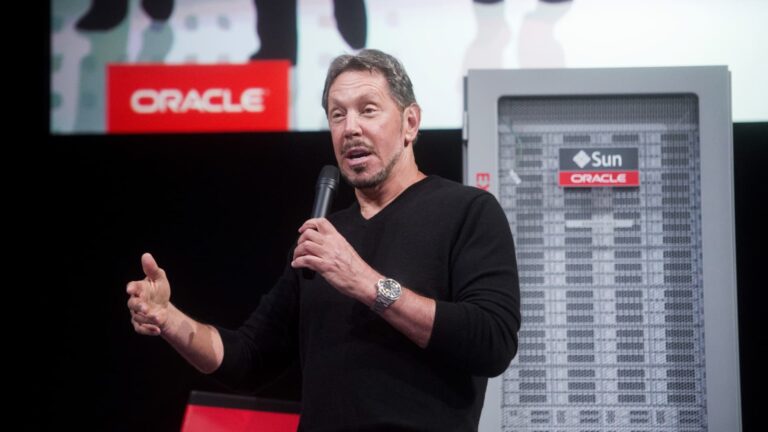
Larry Ellison has abruptly reversed course on a plan to unload a massive chunk of his holdings in Oracle, canceling a proposal to sell up to 50 million shares. Based on current market prices, the move would have seen the company’s founder offload approximately 7.5 billion dollars worth of stock. This sudden change of heart comes just one day after regulatory filings revealed the existence of a trading plan that had been in place since late June and was scheduled to run through October.

According to a news release issued on Saturday, not a single share had actually been sold under the specific rule 10b5-1 plan before it was scrapped. Company representatives noted that Ellison currently has no further intentions of selling any additional shares. At 82 years old, the tech mogul remains deeply entwined with the empire he started in 1977, maintaining an ownership stake of more than 40 percent.

The decision arrives at a volatile time for Oracle as it attempts to transition from its roots as a legacy software provider into a powerhouse for artificial intelligence infrastructure. While this strategic pivot has positioned the firm as a key player in the AI race, it has come with significant costs. The company has taken on a heavy debt load to fund its expansion, contributing to a rough year for investors who have watched the stock price slide about 23 percent.

Beyond his corporate duties at Oracle, Ellison continues to be a central figure in high stakes media deals involving his son, David Ellison. As the CEO of Paramount Skydance, David is currently pursuing an acquisition of Warner Bros. Discovery, with Larry providing critical financial backing for both the initial Skydance merger and the broader bid for WBD. That particular deal remains stalled however as it faces legal hurdles via an antitrust lawsuit filed by state attorneys general.

After several years of explosive growth that saw shares regularly double or triple, Nvidia has entered a period of relative calm. A modest 17 percent gain so far this year might feel underwhelming to those used to the early days of the artificial intelligence boom, especially as concerns mount regarding competition from custom chips and the sustainability of massive spending by Big Tech. However, looking beneath the surface suggests that this lull may actually be a strategic pause before another significant climb.

The core of the bullish case rests on the fact that Nvidia is currently limited by how many chips it can build, not by a lack of buyers. The company recently issued an ambitious forecast calling for roughly 70 percent revenue growth for fiscal 2028, putting them on a trajectory toward 700 billion dollars in sales. According to CEO Jensen Huang, demand is actually higher than that figure, but supply chain constraints involving memory and components have forced a more conservative projection. Essentially, if the industry can produce more hardware, Nvidia’s numbers could soar even further beyond their own targets.

Beyond the usual suspects like Microsoft and Amazon, Nvidia is finding new life through diversified clients including sovereign nations and industrial enterprises. These segments are growing faster than traditional cloud providers and are reducing the company’s dependence on a few giant customers. Meanwhile, futuristic applications are becoming reality; agentic AI requires immense reasoning power, while robotaxi fleets and orbital data centers are transforming GPUs from server room staples into mobile and extraterrestrial infrastructure.

When translating these fundamentals into stock value, analysts see a compelling window for investors. Based on current earnings estimates for fiscal 2028 ending in January of that year, Nvidia could potentially hit a share price of around 388 dollars even if its valuation remains flat. If investor enthusiasm returns to previous levels and pushes the valuation multiplier higher, shares could theoretically climb toward 512 dollars. With current prices hovering around 225 dollars, such a move would represent gains between 72 and 127 percent over the coming years.

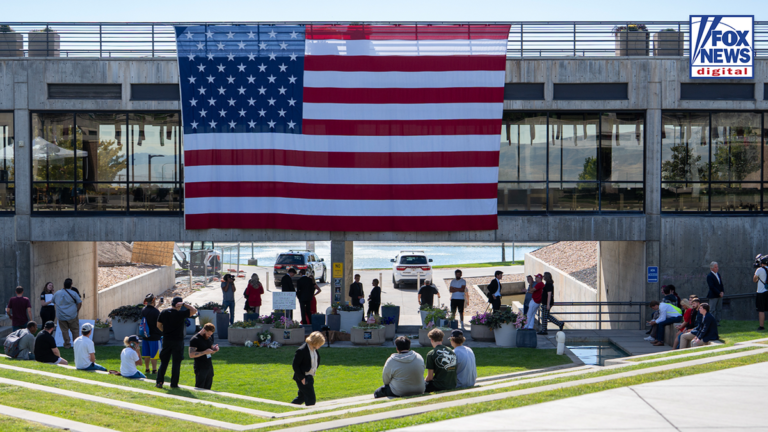
One year after Charlie Kirk was assassinated at Utah Valley University, the people who stood feet from him when he was killed returned to the campus Thursday night in what Turning Point USA (TPUSA) described as a deliberate effort to “reclaim” the space in his honor.

“We’re doing an event in Utah right now at UVU, a deliberate act reclaiming that space in his honor and for his legacy,” TPUSA spokesman and “The Charlie Kirk Show” Executive Producer Andrew Kolvet told Fox News host Jesse Watters Thursday night.

Andrew Sypher, TPUSA’s chief field officer, told the gathering at UVU in Orem that he had been standing about 10 feet to Kirk’s left when the fatal shot rang out on Sept. 10, 2025.

CHARLIE KIRK ASSASSINATION: NEW UVU PRESIDENT SAYS IT WILL CONTINUE TO ‘HOST THE FRAYS,’ EMBRACE FREE SPEECH

“Steps from these doors is the ground where evil unfolded,” Sypher said. “We did not come back to rehearse the crime scene.”

Instead, Sypher said, they returned because “this is where they tried to end him” and “this is where we refuse to let the last word be a gunshot.”

ERIKA KIRK URGES CONSERVATIVE STUDENTS NOT TO BACK DOWN IN FIRST SCHOOL YEAR SINCE CHARLIE’S ASSASSINATION

For the students of UVU’s TPUSA chapter, the anniversary marked a return to the campus where some witnessed Kirk’s assassination.

“A year ago, our lives changed forever,” chapter President Sage Lloyd told the crowd. 

Lloyd said students experienced “fear, grief, confusion, and heartbreak” and had every reason to walk away.

INSIDE CHARLIE KIRK’S EFFORT TO DEVELOP THE NEXT GENERATION OF CONSERVATIVE VOICES

“We could have packed our bags. We could have stepped away,” she said.

Despite the tragedy, the TPUSA chapter stayed.

“The same students who witnessed a political assassination are willing to stand up, speak out and keep moving forward,” Lloyd said.

“We can let it define us through fear, or we can let it strengthen us through courage,” she added. “The Turning Point chapter at UVU has made our decision, and we chose courage.”

Sypher also revealed what he said was a text Kirk sent him on the morning he was assassinated.

SURVEILLANCE VIDEO TIMELINE TRACKS ACCUSED CHARLIE KIRK ASSASSIN ACROSS UVU CAMPUS BEFORE FATAL ROOFTOP SHOT

“Andrew, I’m not here to pick a fight. I am here to show them kindness,” Kirk wrote, according to Sypher.

“That was the assignment this time,” Sypher said. “To talk with students who hate you. To share the truth, and to not become cruel doing it.”

Soon afterward, Kirk was fatally shot.

“Charlie’s assassination did not put our faith to death,” Sypher told the crowd. “It woke it up.”

The service was marked with worship performances and video tributes to the fallen conservative leader, as well as an unveiling of a new statue to stay on campus at UVU.

ERIKA KIRK PENS ESSAY ON GRIEF AS READERS GAIN INSIGHTS INTO WRENCHING PAST YEAR

Kirk’s widow, Erika Kirk, separately marked the anniversary with a black-and-white photograph from their wedding showing the couple holding hands.

Across the image were two words: “…until Heaven.”

The university closed its campus for the one-year anniversary. UVU itself did not organize the memorial, but university President Dr. Jon Anderson previously told Fox News Digital the school supported TPUSA using campus space for its event.

Lloyd closed her remarks with a message about what returning to UVU meant for Kirk’s student movement.

“Our chapter is still here, we are still speaking, and we are nowhere near done,” she said. “And that is how his voice lives on.”

Fox News Digital’s Michael Ruiz contributed to this reporting.

This post appeared first on https://www.foxnews.com